There's a familiar pattern that plays out every time something scary happens in the world. Tensions flare in the Middle East, markets sell off, and suddenly everyone's asking whether this time is different. Whether this is the one that finally breaks the trend.
It won't be. But understanding why is actually useful, not just reassuring.
Something Is Always Happening
This is probably the most underappreciated fact in investing. There's no clean period in market history where nothing was going on and stocks just calmly marched higher. There's always a war, a banking crisis, an election, an oil shock, a pandemic, or some combination of all of them.
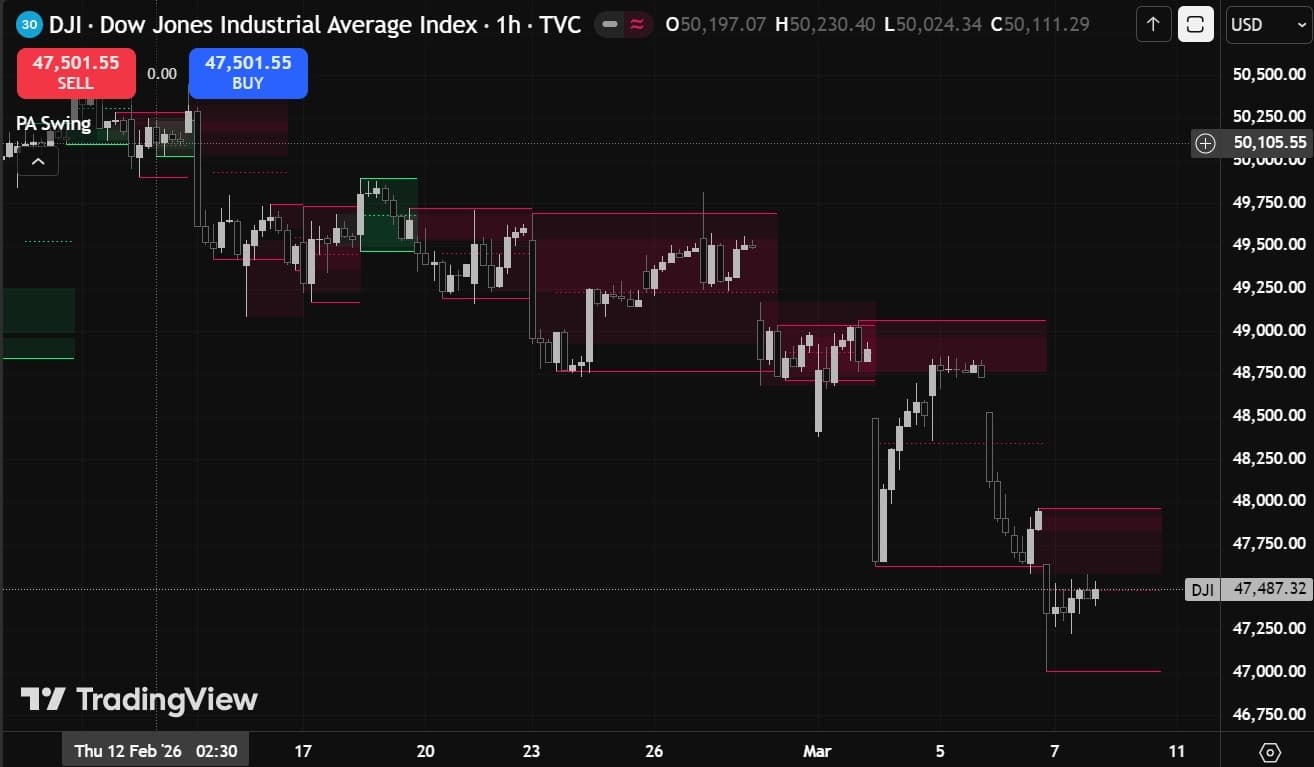
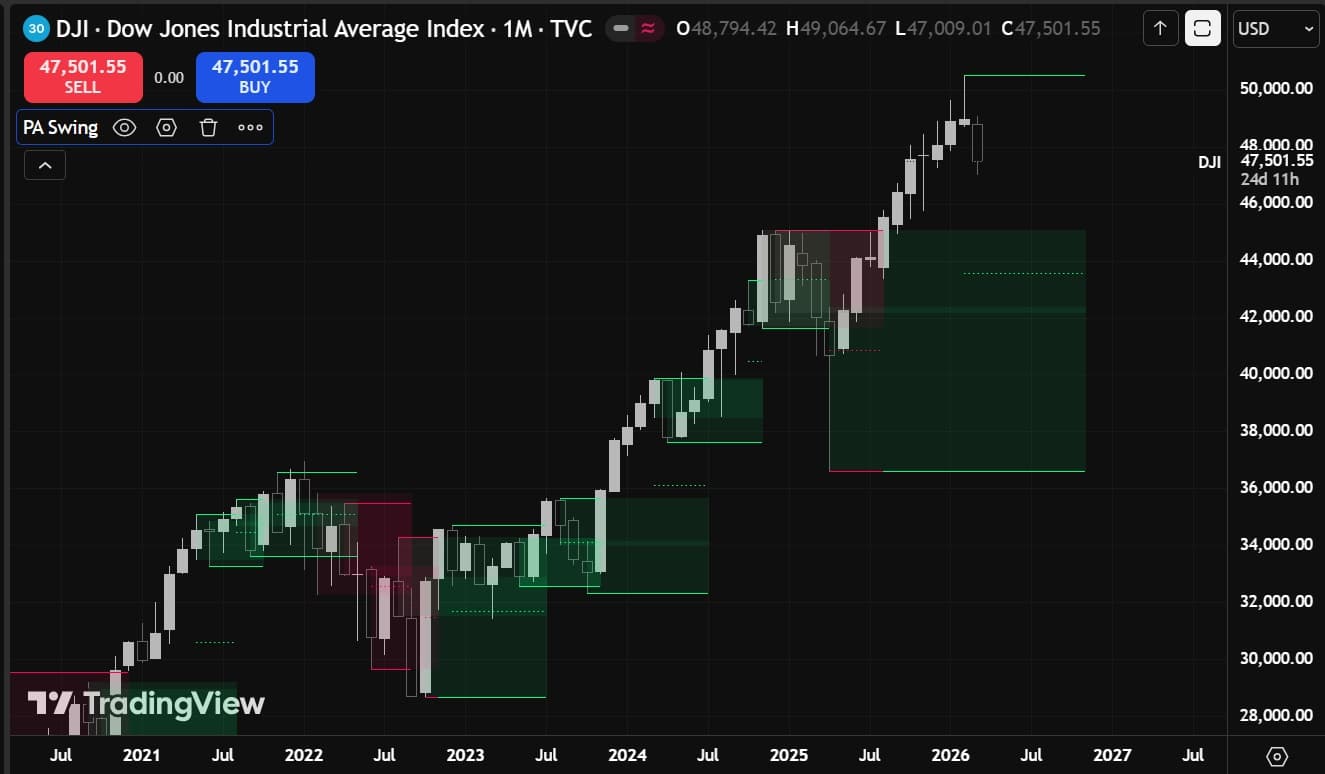
Warren Buffett ran the numbers on this once. In the 20th century, the U.S. dealt with two world wars, the Great Depression, a dozen plus recessions, oil shocks, and a president resigning in disgrace, and the Dow still went from 66 to 11,497. That's not despite the chaos, it's through it, with all of it counted.
So if your investing framework requires a calm world to work, it was never going to work.
See the DJI over the hour chart vs monthly chart.
What the Market Is Actually Pricing
When you see $SPY drop 2% on Middle East news, the market isn't saying "everything is ruined." It's repricing risk. Traders are adjusting probability weighted outcomes for oil supply, inflation pressure, potential disruptions to shipping routes, all of it getting folded into price in real time.
That's normal price discovery. It's the market doing its job.
The question isn't whether volatility is happening. It's whether the volatility represents a genuine change to long term fundamentals, or whether it's noise that'll look like a blip in five years. Most geopolitical events fall into the second category.
The Counterintuitive Move
If you're already holding high quality dividend growth stocks, solid businesses with durable competitive advantages and managements that actually return cash to shareholders, then the counter intuitive answer is to do nothing.
Not because you're ignoring risk. Because you already accounted for it when you built the portfolio. These aren't companies that fall apart when oil prices spike or when some conflict escalates. They've been through worse.
And if prices drop far enough that valuations look genuinely attractive? That's when reinvesting dividends or adding fresh capital starts to make real sense. You're buying the same quality business at a cheaper price, and your future yield on cost just got better.
Volatility Is the Toll, Not the Problem
There's a useful way to think about market volatility: it's the price of admission for long term returns. You don't get to compound at 8-10% annually without sitting through drawdowns that feel genuinely awful in the moment.
The traders who struggle most in volatile environments are usually the ones who came in expecting a smooth ride. The ones who hold up are the ones who expected turbulence and planned for it.
That doesn't mean you hold everything blindly. Businesses deteriorate, thesis breaks happen, and sometimes a position deserves to be cut. But "there's conflict in the Middle East and $SPY is down" is not a thesis break for a well constructed dividend portfolio.
What to Actually Watch
If you want to monitor real risk rather than news driven noise, focus on a few things. Watch whether your companies are maintaining or growing dividends, because management cutting the dividend tells you something actual fundamentals aren't supporting. Watch balance sheet quality, since companies with low debt and strong free cash flow survive volatility that wipes out more leveraged businesses. And watch whether the companies you own are still buying back shares at these prices, which signals management thinks the stock is cheap too.
That's a more useful checklist than tracking every news cycle out of the Middle East.
The long term trend in equity markets is positive. It's been positive through everything the 20th century threw at it, and there's no structural reason to think the 21st century breaks that pattern just because current events feel uniquely bad. They always feel uniquely bad. That's the nature of living through history instead of reading about it.